

Understanding BJJ Plateaus Without Losing Perspective
BJJ plateaus can make a familiar class feel surprisingly discouraging. You keep attending, recognise the techniques, and still find yourself caught in the same position. It is easy to wonder whether your progress has stopped, especially when a training partner seems to improve faster.
At Gracie Barra Kerrisdale, we encourage you to bring those questions into your training. Feeling stuck gives us something specific to discuss. These three steps offer a practical way to understand the difficulty, ask for useful guidance, and notice changes that a belt or a successful round cannot always capture.
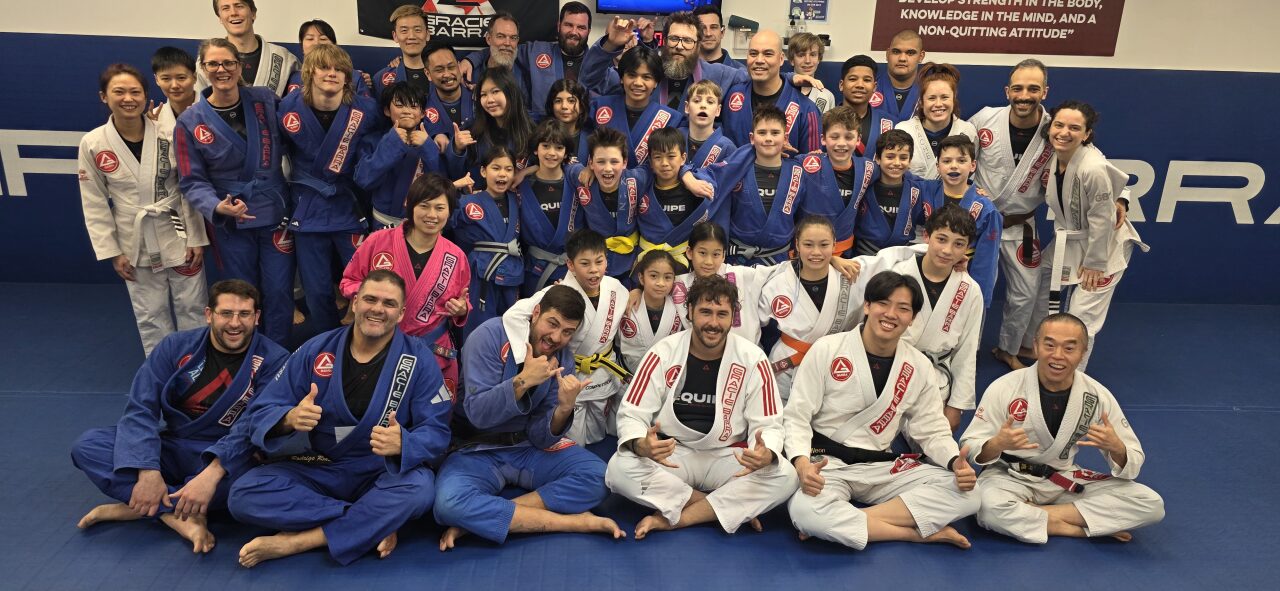
Train With Us at Gracie Barra Kerrisdale
Contact UsWhy Progress Can Become Harder to See
Early lessons introduce many unfamiliar movements, so improvement can feel obvious. Later, the changes may become smaller: recognising a position sooner, keeping your balance a little longer, or remembering a detail while moving. Those differences are harder to spot when you judge every session by its final result.
Your partners are learning too. Someone who regularly escapes your control may have been working on exactly that problem. Their improvement changes the challenge you face. A difficult exchange therefore tells only part of the story about your own BJJ progress.
BJJ plateaus can also reflect unclear expectations. Learning a movement during a demonstration and using it against a moving partner are different tasks. Understanding that gap helps you choose an appropriate next step instead of expecting every new technique to work immediately.
3 Essential Steps for Working Through BJJ Plateaus
1. Choose One Specific Difficulty to Explore
Replace a broad judgement such as “nothing works” with a question you can investigate. Perhaps you lose your balance when a partner changes direction, or you forget the first part of an escape. Identifying that moment makes the next conversation with your instructor much more useful.
Keep the goal small enough to recognise during class. You might work on noticing where your weight is going, remembering the order of a movement, or pausing to reset when you become confused. Your instructor can help you decide which detail deserves attention first.
A simple training journal can help you keep that focus between sessions. Write down the situation, the question it raised, and one detail you want to revisit. Two or three lines are enough; you do not need to reconstruct every exchange or turn training into homework.
For example, recognising that you lose track of your partner’s movement is more useful than deciding you are “bad at guard.” That observation gives your instructor a starting point. Working through BJJ plateaus becomes more manageable when the problem has a clear setting and your next practice has a purpose.
Our GB1 Fundamentals programme provides a place to revisit essential positions and movements. Returning to a familiar lesson with a clearer question can reveal something you missed when everything was new.
2. Ask for Feedback and Practise With a Partner
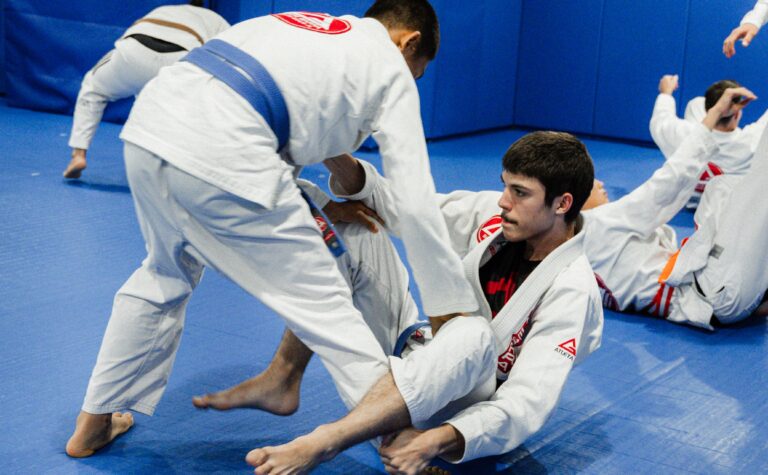
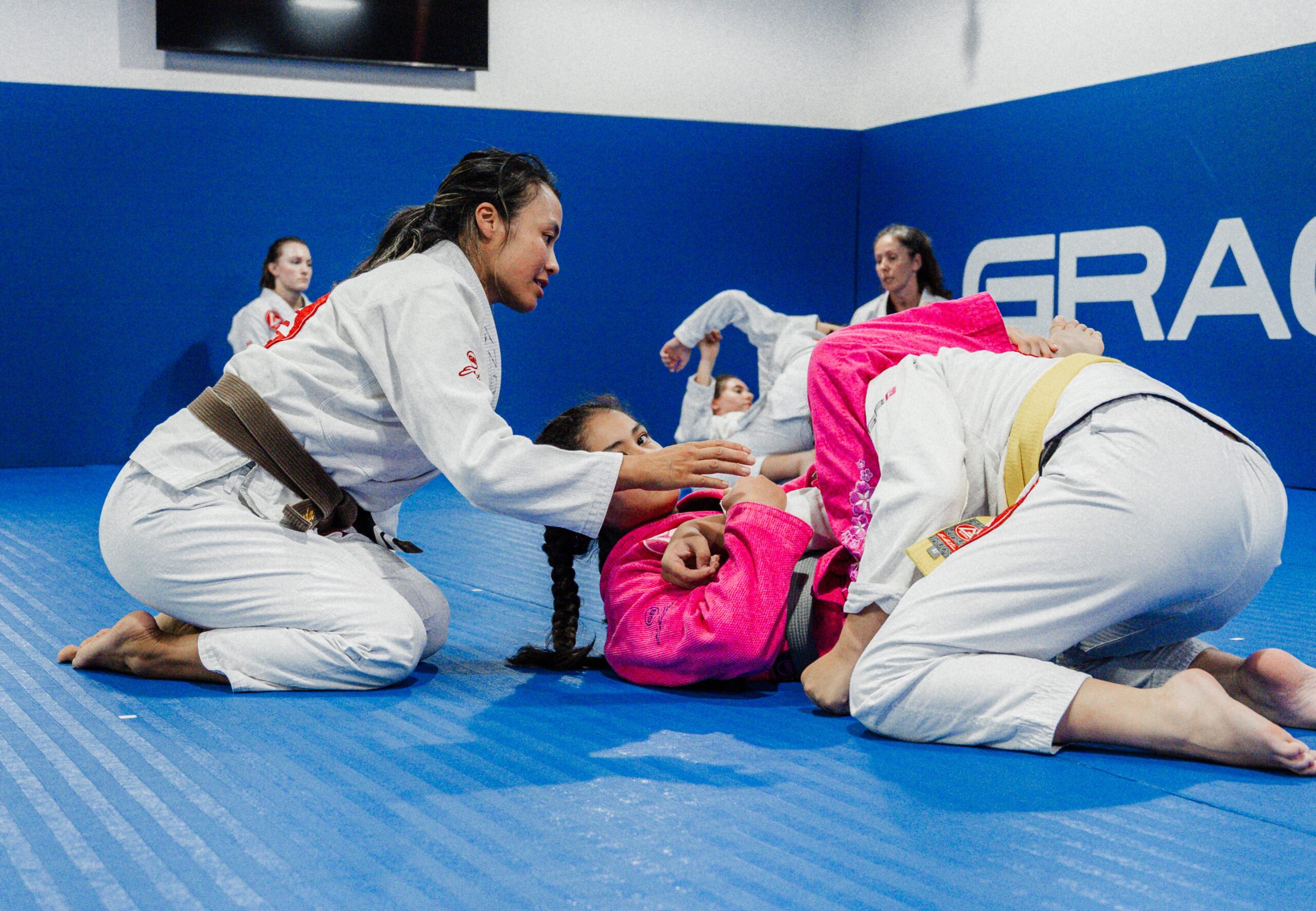
During BJJ plateaus, useful feedback often begins with a precise description. Try asking, “Where am I losing my balance here?” or “Which part should I practise first?” Give your instructor a chance to observe the situation rather than asking for a completely new technique immediately.
At Gracie Barra Kerrisdale, our values of brotherhood, development, and integrity support this approach to learning together. Ask a partner to revisit the movement within the exercise your instructor has set. Agree on the pace, take turns, and leave room for questions.
A partner who gives you time to understand an adjustment helps create a useful learning opportunity. Returning that patience when it is their turn builds trust. These exchanges can make asking for help feel easier and turn regular training partners into familiar, supportive connections.
Cooperative practice is not a promise that a technique will suddenly work in every situation. It gives you space to understand the correction before adding complexity. Follow your instructor’s guidance about when and how to increase the challenge.
3. Recognise Changes Beyond Winning a Round
BJJ progress includes what you understand and how you respond. Perhaps you now recognise a position before your partner settles into it. You may remember a correction without prompting, ask a more precise question, or stay composed long enough to consider an option.
Use your training journal to compare these observations across several sessions. Look for a repeated change rather than treating one unusually good or difficult evening as a verdict. If the same question remains unresolved, bring those notes back to your instructor.
The American Psychological Association recommends realistic goals and small, regular steps when building resilience. Applied to training, that perspective encourages you to choose an action you can take today without demanding an immediate breakthrough.
Recognising a small improvement does not mean ignoring frustration. It gives you a more complete picture. You can acknowledge that a position remains difficult while also noticing that your understanding of it has changed.
Turn the Next Few Classes Into a Useful Check-In
Before your next class, choose one question from these steps. During practice, listen for a correction that addresses it. Afterwards, record what became clearer and what still needs explanation. This creates continuity between lessons without requiring extra sessions or an entirely different routine.
Keep your attendance realistic too. If you are rushing into class exhausted or struggling to maintain your week, revisit how often to train BJJ and discuss a manageable schedule with us. More classes are not automatically the answer to an unclear learning problem.
Choose a review point with your instructor rather than changing your goal after every round. A short conversation can help distinguish BJJ plateaus from expectations that need adjusting. Bring your training journal and ask which signs of BJJ progress are most relevant to your current focus.
Meet Us at Gracie Barra Kerrisdale
Try Your First ClassTake Your Next Step With Confidence
BJJ plateaus do not need to define your experience on the mats. A clearer question, patient feedback, and a broader view of improvement can give your next session a useful direction. There is no deadline for making every movement feel natural.
Whether you already train with us or are looking for a welcoming place to begin, Gracie Barra Kerrisdale invites you to keep learning with support. Contact us to try your first class and meet our team at 2038 W 41st Ave, Vancouver.